

Swedish candy has a reputation for being the “better” candy. You’ve seen the claims online: no high-fructose corn syrup, no gelatin, no artificial dyes. Some of that is true. Some of it is marketing. So is Swedish candy actually healthy? The honest answer is that it depends on what you mean by healthy. And no, it’s still candy.
This article shares general ingredient information, not medical or nutrition advice.
What’s actually in Swedish candy
Most Swedish gummies and foam candy are built from a short list: sugar, glucose syrup, water, starch or gelatin for the chew, fruit acids like citric and malic acid, natural flavorings, and colors from fruit and vegetable extracts. That’s the basic formula behind most of the pick-and-mix candy sold in Sweden.
A few things worth noting. First, the sweetener is usually glucose syrup and sugar, not high-fructose corn syrup. HFCS is rare in Swedish-made candy; it’s mainly an American formulation habit, not a global standard. Second, colors tend to come from things like beetroot, black carrot, and spirulina rather than synthetic dyes. Third, ingredient lists are often shorter than their American counterparts, which is where the “cleaner label” reputation comes from. Shorter doesn’t mean sugar-free, though.
Gelatin: which candies have it
Traditional Swedish gummies (the dense, chewy kind) are usually made with gelatin, just like gummies everywhere else. The gelatin is typically pork or beef derived. If you eat gelatin, this changes nothing for you.
But a large and growing share of Swedish candy skips it entirely. BUBS is the best-known example: the whole brand is built on starch-based recipes (corn starch, potato starch, and the like), which is also why their candy has that soft, foamy texture instead of a heavy chew. Many loose pick-and-mix gummies are gelatin-free too.
How to tell: check the ingredient list. “Gelatin” is listed plainly when it’s there. If a bag says gelatin-free or vegan, the structure usually comes from starches or plant-based gums instead. We’ve rounded up the current gelatin-free Swedish candy picks if you want to browse.
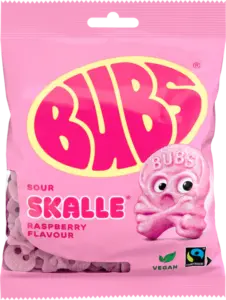
Bubs Sour Raspberry Skull
BUBS Sour Raspberry Skull
Gluten: what to watch for
Most Swedish gummies, foam candy, and chocolate are naturally gluten-free. There’s no wheat, barley, or rye in the recipe. But there’s one big exception: licorice. Traditional Swedish licorice is often made with wheat flour, which gives it that firm, chewy bite. Salt licorice (salmiak) is a frequent offender.
This catches people off guard because licorice doesn’t look like it contains flour. If you avoid gluten, especially if you have celiac disease, read licorice labels carefully and look for bags explicitly marked gluten-free. Our gluten-free Swedish candy list has the current options.
Sugar and calories vs American candy
Here’s the part the marketing tends to skip: Swedish candy has roughly the same amount of sugar and calories as American candy. A gummy is a gummy. The real difference is what comes with the sugar: glucose syrup and cane or beet sugar instead of high-fructose corn syrup, natural colors instead of synthetic dyes, not how much sugar is in the bag.
So if the question is “can I eat unlimited Swedish candy because it’s healthy?” No. It’s still candy, with all the sugar that implies. What’s fair to say is that the recipes tend to be simpler, with fewer synthetic additives. We go deeper on the recipe differences in our Swedish vs American candy breakdown.
Vegan options
Because so much Swedish candy is made without gelatin, vegan options are easy to find. BUBS is the obvious pick. The entire brand is gelatin-free and vegan, but plenty of other gummies, sours, and foam candies qualify too. The things to double-check: milk chocolate (obviously), and occasionally beeswax or carmine coloring in red candy. Our vegan Swedish candy list rounds up the current picks.
Want less sugar? Try Pandy or Tweek
Regular Swedish candy has about as much sugar as American candy. But Sweden also has brands built for people who want the taste with less sugar. Pandy and Tweek are the two best-known: both make low-sugar versions of classic gummy shapes using fiber and sugar alcohols instead of most of the sugar.
They get close to the real thing, though the texture is a little different and sugar alcohols can have an aftertaste some people notice. If you eat a lot of candy and want to cut back without quitting, they are worth trying. As always, check the label: low-sugar does not mean sugar-free, and it does not mean calorie-free.
The bottom line
Swedish candy is made differently from American candy: simpler sweeteners, fewer synthetic dyes, and widely available gelatin-free and vegan options. That’s a real difference, and it’s worth knowing about if ingredients matter to you. It doesn’t make it health food. Enjoy it the Swedish way: as a treat, in moderation. And check the ingredient list if you have dietary needs. You can browse the full Swedish candy catalog to compare what’s out there.
Frequently Asked Questions
-
Some does, but a lot doesn’t. Traditional chewy gummies often contain pork or beef gelatin, while brands like BUBS and many pick-and-mix gummies are gelatin-free. Check the ingredient list, or browse our gelatin-free candy picks.
-
Much of it is. Most gummies, foams, and chocolate contain no gluten ingredients, but licorice often contains wheat flour, so read labels carefully. See our gluten-free candy list.
-
No. Sugar and calorie content is roughly comparable to American candy. The difference is in the types of sweeteners and additives used, not the amount of sugar.
-
A lot of it is. Many Swedish gummies are made without gelatin or other animal ingredients. BUBS is fully vegan, for example. Still, check labels for milk chocolate, beeswax, or carmine. Our vegan candy list has verified picks.
-
Not necessarily. The sugar and calorie content is roughly comparable. The difference is in what’s around the sugar: Swedish candy rarely uses high-fructose corn syrup, colors usually come from fruit and vegetable extracts instead of synthetic dyes like Red 40, and you won’t find trans fats. So the ingredient list looks cleaner, but it’s still candy. Read our full Swedish vs American candy comparison.
-
Generally no. Swedish brands typically color their candy with fruit and vegetable extracts (beetroot, black carrot, spirulina) rather than synthetic dyes like Red 40. Ingredients vary by product, so check the individual label to be sure.