
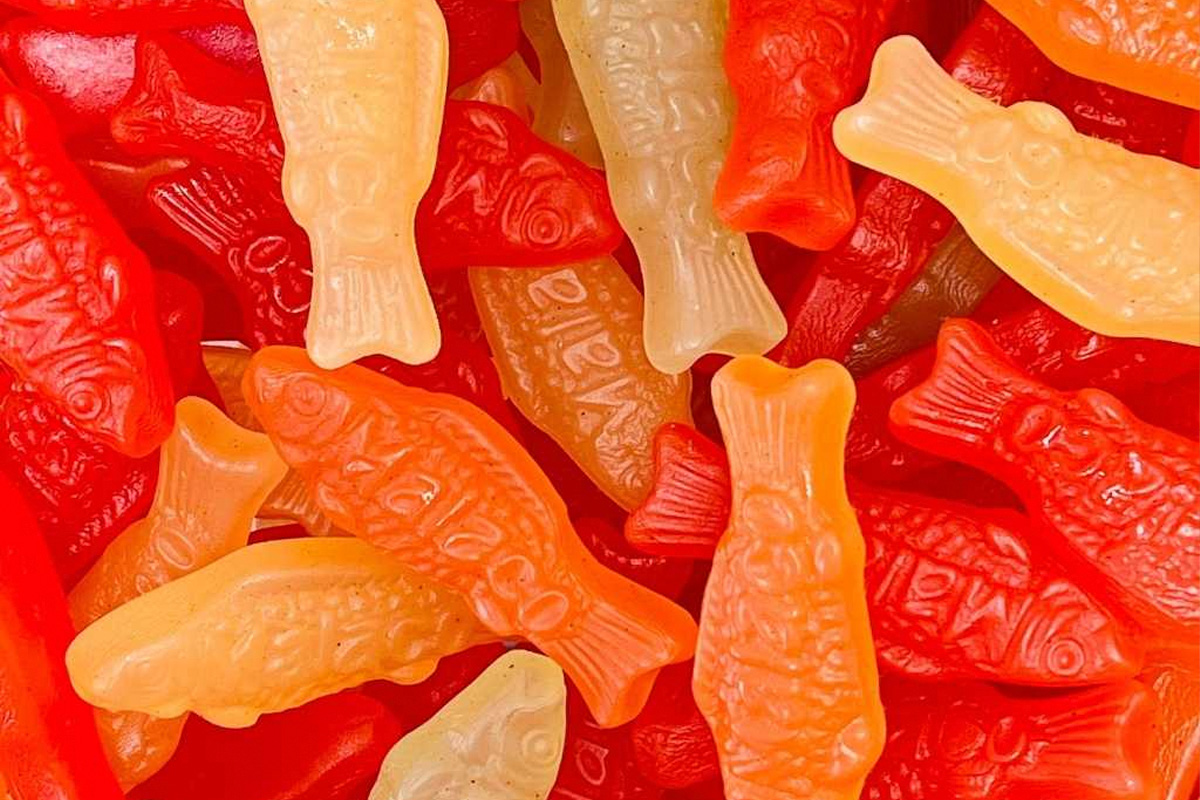

Ask an American to name a Swedish candy and most will say two words: Swedish Fish. They are in every movie theater, every Halloween bowl, every gas station checkout lane. But here is the question that trips everyone up: are Swedish Fish actually Swedish?
The short answer is: sort of. They were invented by a Swedish company, for Americans, and the fish you buy in the US today are made in Canada. Let me untangle it.
The history: a Swedish invention for the American market
Swedish Fish were launched in the US in 1957. The original owner was Malaco, a Swedish confectionery company that wanted to expand into North America and entered a partnership with Cadbury to do it.
Malaco needed a product that would catch an everyday American’s eye while still reflecting Sweden somehow. Fishing was (and still is) a huge part of Swedish culture and the Swedish diet, so the company landed on a fish-shaped chewy candy. The shape was a deliberate nod to Sweden’s fishing heritage, designed from day one for the North American market.
So yes, Swedish Fish really were born in Sweden. But they were never really *for* Sweden. They were an export product from the start, Sweden’s candy ambassador to America, you could say.
What “Swedish” means on the bag today
Here is where it gets less Swedish. Today, Swedish Fish are owned and distributed in the US by Mondelez International (the same company behind Oreo). The fish sold in North America are manufactured in Hamilton, Ontario, Canada. In Canada they are even sold under Cadbury’s Maynards brand.
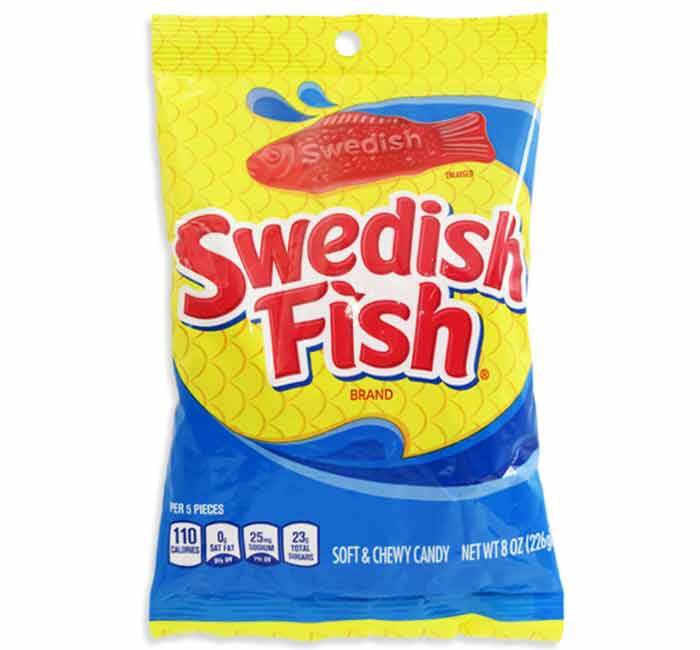
Nothing about the modern supply chain touches Sweden. The recipe, the branding, the fish shape: Swedish in origin. The factory: Canadian. It is a bit like asking whether a Volvo designed in Gothenburg but built in South Carolina is Swedish. The honest answer is “it’s complicated.”
Pastellfiskar: the Swedish cousin you have never met
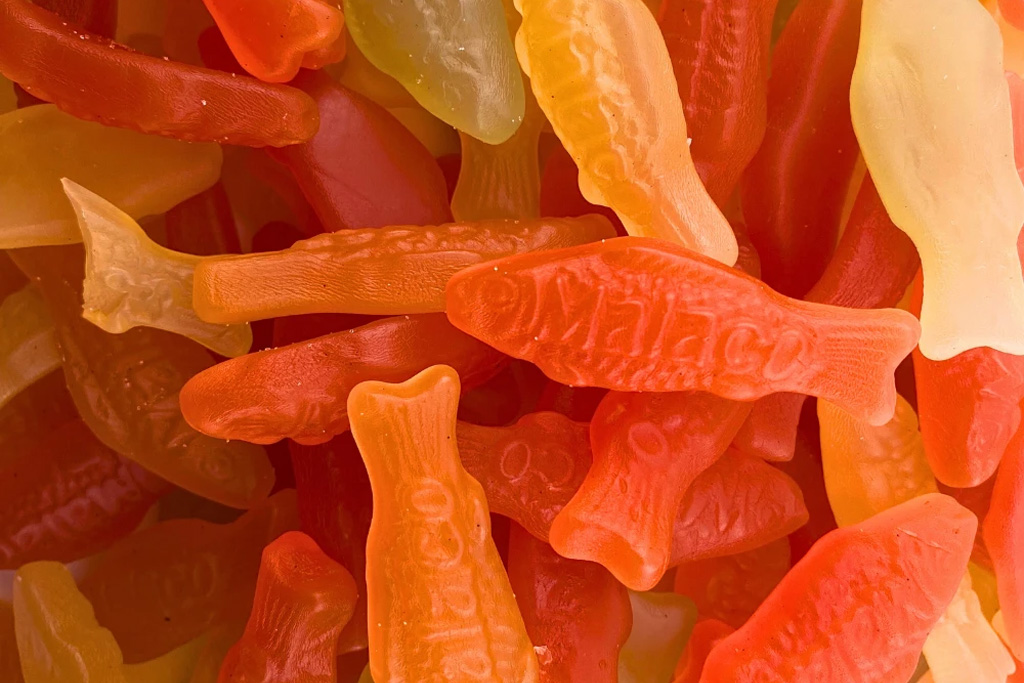
Meanwhile, back in Sweden, Malaco still sells fish-shaped candy. There it goes by the name *pastellfiskar*: literally “pastel fish.” They look familiar, but there are differences: the Swedish version does not have the word “Swedish” stamped into its side, and it comes in flavors Americans rarely see, including salmiak, the salty licorice flavor that Sweden loves and the rest of the world fears.
In Sweden, fish are just one shape among many in the pick-and-mix wall. Nobody there thinks of them as special. They are background candy: the chewy filler between the sour skulls and the foam cars.
The flavor mystery nobody has solved
What do Swedish Fish actually taste like? The red ones have a flavor everyone recognizes and nobody can name. The most common guess is lingonberry, the tart red berry that shows up on every IKEA menu. It is a good guess. It is also unverified: Mondelez has never officially confirmed what the flavor is supposed to be.
Over the years the lineup expanded: orange, lemon-lime, and (briefly) grape joined the original red. A visit to the factory once revealed that the green fish are pineapple, not lime. But the red one’s true identity remains one of candy’s great unsolved mysteries.
Swedish Fish vs. actual Swedish candy
Here is the thing most Americans miss: Swedish Fish belong to a candy family called wine gums. They are gelatin-free, made chewy with starch instead of gelatin, which is why they have that distinctive firm-but-yielding bite instead of the rubbery bounce of a gummy bear. That starch-based chew is deeply Swedish: a huge share of Sweden’s candy is built the same way.
But Swedish Fish are the mild, mass-market end of the spectrum. Real Swedish candy culture is the pick-and-mix wall: hundreds of varieties, sweet against sour against salty, foam against chew. If you want to taste what Sweden actually snacks on, the fish are the shallow end. The deep end has salt licorice that makes grown adults cry.
If you are curious what the real range looks like, compare Swedish candy across US stores. The fish will not be there (they are a supermarket candy, not a specialty import), but everything around them will be. For the full cultural contrast, read Swedish candy vs American candy. And if the gelatin-free angle matters to you, Sweden does it better than anyone. See the gelatin-free selection.
Where to find them (and what to try next)
You do not need a specialty store for Swedish Fish. They are everywhere: Target, Walmart, Amazon, every movie theater in America. Trader Joe’s even sells a lookalike under the name “Scandinavian Swimmers.”
But if this article made you curious about what Sweden *actually* eats on a Saturday night, skip the fish and build a real pick-and-mix bag instead. Start with something foamy, add something sour, and (if you are brave) finish with salt licorice. That is the real Swedish candy experience. The fish were just the invitation.
Where to buy real Swedish candy fish
If you want to taste the original Swedish candy fish (firmer and more flavorful, with no Red 40 or artificial flavors) that is a different candy from the American bag. Sötsak sells a Sötsak Fish Mix bag of nothing but original Swedish candy fish ($19.99/lb), which makes the side-by-side comparison easy.
Frequently Asked Questions
-
Sort of. Swedish Fish were invented by the Swedish company Malaco and launched in the US in 1957, in partnership with Cadbury. They were designed from the start for the North American market: the fish shape was a nod to Sweden’s fishing culture. Today they are owned by Mondelez and made in Canada, so modern Swedish Fish have little connection to Sweden beyond their origin story.
-
The red Swedish Fish are widely believed to taste like lingonberry, but Mondelez has never officially confirmed the flavor. Other colors include orange, lemon-lime, and pineapple (the green fish are pineapple, not lime, according to a factory visit). The exact recipe remains one of candy’s best-kept secrets.
-
Swedish Fish sold in North America are made in Hamilton, Ontario, Canada, by Mondelez International. In Canada they are distributed under Cadbury’s Maynards brand. Malaco still sells a fish-shaped candy in Sweden under the name pastellfiskar.
-
Swedish Fish are gelatin-free. They get their chew from starch, not gelatin, which makes them suitable for vegetarians. The wrapper also states they are gluten-free and fat-free. Recipes can change, so always check the current label if you have dietary restrictions.
-
Pastellfiskar (“pastel fish”) is the name under which Malaco sells fish-shaped candy in Sweden. Unlike the American version, the Swedish fish do not have “Swedish” stamped on them, and they come in flavors like salmiak (salty licorice) that are rarely seen in the US.